
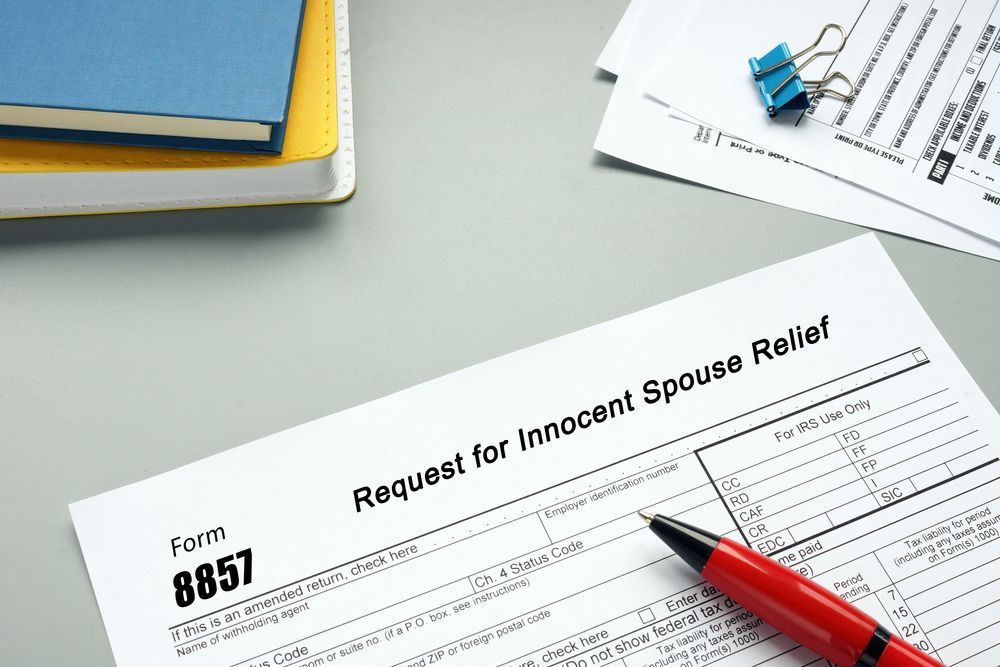
When you file a joint tax return with your spouse, you’re both saying to the IRS: We’re in this together. That means both of you are jointly and individually liable for any tax owed—even if the unpaid balance, errors, or fraud were entirely your spouse’s doing.
It’s one of the most misunderstood and frightening parts of the tax code. Imagine finding out years later that your ex (or soon-to-be ex) underreported income or claimed fake deductions—and now the IRS wants to collect from you.
The good news? The tax law gives you a way out, known as Innocent Spouse Relief. This powerful but complex program can protect you from paying taxes, interest, and penalties caused by your spouse’s (or former spouse’s) wrongdoing. If you qualify, the IRS can legally remove your liability—freeing you from a tax mess you didn’t create.
Let’s unpack what it is, how it works, and how a tax resolution professional can help you navigate it successfully. And if you have any questions after reading this you can contact IRS Tax Fighters by calling 281-962-0070 or by going to our contact page to schedule a free consultation.
What Is Innocent Spouse Relief?
Innocent Spouse Relief is part of IRC §6015, designed for people who filed joint returns but shouldn’t be held responsible for a spouse’s errors or fraud.
It comes in three forms:
1. Innocent Spouse Relief (§6015(b)) – You didn’t know, and had no reason to know, of an understatement on the joint return.
2. Separation of Liability Relief (§6015(c)) – You’re divorced, legally separated, or no longer living with your spouse, and want to separate your share of tax.
3. Equitable Relief (§6015(f)) – When the first two don’t fit, but fairness says you shouldn’t be held liable.
Each has unique requirements, but they all aim to prevent you from being punished for a spouse’s wrongdoing.